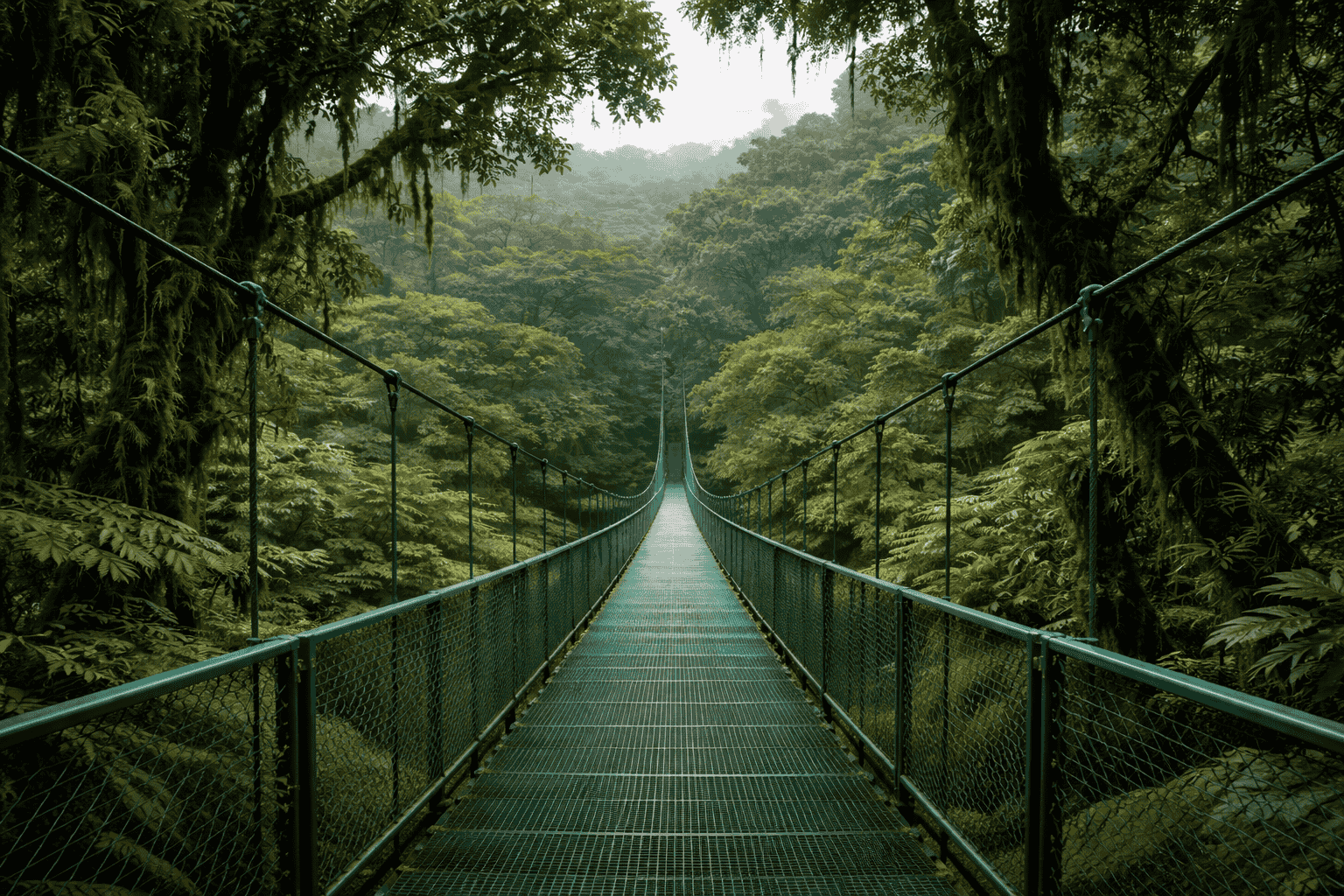
Costa Rica is a vibrant tapestry of lush rainforests, pristine beaches, smoldering volcanoes, and incredible biodiversity. If you are planning a trip to this Central American paradise, the first question that naturally comes to mind is: What is the best time to travel to Costa Rica?
The short answer is that there is no strictly “bad” time to visit. However, the best time entirely depends on what you want to experience. Whether you are chasing endless sunshine on the Guanacaste coast, hunting for the perfect surfing swell, hoping to witness sea turtles nesting, or traveling on a strict budget, timing is everything.
Unlike destinations with four distinct seasons, Costa Rica’s climate is primarily dictated by rainfall, dividing the year into two main periods: the Dry Season (High Season) and the Green Season (Rainy/Low Season). Furthermore, the country is home to a dozen distinct microclimates. It could be pouring rain in the rainforest and radiantly sunny on a beach just an hour away.
In this comprehensive guide, we will dive deeper than any standard travel brochure. We will explore Costa Rica’s weather patterns month-by-month, break down the best times for specific activities (from digital nomad living to eco-tourism), and give you the ultimate seasonal packing lists so your adventure is nothing short of “Pura Vida.”
Understanding Costa Rica’s Two Main Seasons
To pinpoint the best time to travel to Costa Rica, you must first understand its two primary seasons. Because Costa Rica is located just north of the equator, temperatures remain relatively consistent year-round (averaging between 70°F to 81°F or 21°C to 27°C, depending on elevation). The real variable is the rain.
The Dry Season (December to April)
Often referred to as the High Season, the dry season is generally considered the best time to travel to Costa Rica for perfect beach weather.
- Weather: Expect brilliant blue skies, minimal rainfall, and plenty of sunshine.
- Crowds: This is the peak tourist season. North Americans and Europeans flock here to escape the harsh winter snow. Expect crowded national parks and busy beaches.
- Pricing: Accommodation, flights, and tour prices are at their highest. Holiday weeks (Christmas, New Year’s, and Easter/Semana Santa) require booking up to a year in advance.
- Best For: Sunbathing, smooth road trips, hiking without the mud, and guaranteed beach days in regions like Guanacaste and the Nicoya Peninsula.
The Green Season (May to November)
Locals lovingly call the rainy season the “Green Season” because the daily showers bring the tropical landscape back to life. The dust settles, the rivers swell, and the rainforest canopy explodes into vibrant shades of green.
- Weather: Mornings are typically warm and sunny, with heavy but brief rain showers rolling in during the mid-to-late afternoon. September and October are the wettest months on the Pacific side.
- Crowds: Significantly fewer tourists. You can enjoy iconic spots like Manuel Antonio or Arenal Volcano without rubbing elbows with massive crowds.
- Pricing: This is the budget traveler’s dream. Hotels often slash prices by 20% to 40%, and airlines offer deep discounts.
- Best For: Budget travel, whitewater rafting, wildlife spotting (animals are more active when it’s cooler), surfing, and experiencing lush, vibrant jungles.
Pro Tip: The Caribbean coast (Puerto Viejo, Tortuguero) plays by its own rules. When the Pacific side is experiencing its heaviest rainfall (September and October), the Caribbean coast is enjoying its secret dry season!
Month-by-Month Guide to Visiting Costa Rica
To help you plan the perfect itinerary, here is a detailed, month-by-month breakdown of weather, wildlife, events, and overall vibe.
| Month | Season | Avg. Temp (°C / °F) | Avg. Rainfall (mm) | Best For |
|---|---|---|---|---|
| January | Dry Season | 22-31°C / 72-88°F | 10 mm | Beach days & clear skies |
| February | Dry Season | 23-32°C / 73-89°F | 10 mm | Wildlife spotting |
| March | Dry Season | 24-32°C / 75-90°F | 15 mm | Surfing & sunbathing |
| April | Dry / Transition | 24-33°C / 75-91°F | 35 mm | Scuba diving & marine life |
| May | Green Season | 23-32°C / 74-89°F | 230 mm | Shoulder season travel deals |
| June | Green Season | 23-31°C / 73-88°F | 280 mm | Waterfall chasing |
| July | Green / Mini-Dry | 23-31°C / 73-88°F | 185 mm | Family trips & whale watching |
| August | Green Season | 23-31°C / 73-88°F | 250 mm | Sea turtle nesting |
| September | Peak Green Season | 22-30°C / 72-87°F | 350 mm | Caribbean coast travel |
| October | Peak Green Season | 22-30°C / 72-87°F | 360 mm | Caribbean culture festivals |
| November | Green / Transition | 22-30°C / 72-87°F | 120 mm | Photography & lush landscapes |
| December | Dry / Transition | 22-31°C / 72-88°F | 20 mm | Holiday getaways & festivals |
January
January sits right in the sweet spot of the dry season. The heavy holiday crowds of late December begin to thin out slightly by the second week, but the weather remains spectacular. The Pacific coast and Central Valley are sunny and breezy. The rainforests are still lush and green from the recently ended rains.
- Highlights: Excellent visibility for scuba diving and snorkeling; the Palmares Festival (a massive local cowboy and carnival festival) takes place.
- Drawbacks: Prices are high, and popular tours sell out fast.
February
February is arguably the most popular month for tourists. The dry season is firmly established. The tropical dry forests in the northwest (Guanacaste) start to drop their leaves, making wildlife spotting much easier.
- Highlights: Perfect for exploring the Osa Peninsula. Quetzal birds begin their nesting season in the cloud forests of Monteverde.
- Drawbacks: Extremely busy. Advance reservations for everything are mandatory.
March
March is hot, dry, and bustling. If Easter falls in March, be prepared for “Semana Santa” (Holy Week). During this week, locals head to the beaches en masse. It is an incredible cultural experience but completely packed.
- Highlights: The National Orchid Show in San José; incredible surfing on the Pacific Coast.
- Drawbacks: The driest landscapes can look a bit brown and parched, particularly in the northern regions. Dust on unpaved roads can be an issue.
April
April is typically the hottest month of the year in Costa Rica. The dry season is clinging on, but by the end of the month, the humidity rises, and the first transitional showers begin to fall.
- Highlights: The last chance for guaranteed dry beach days before the green season starts. Great time for marine life viewing as animals gather around dwindling water sources.
- Drawbacks: Uncomfortable heat in lowland areas.
May
May marks the official transition into the Green Season. Prices begin to drop, and the crowds disperse. The rain isn’t constant; it usually comes in the form of predictable afternoon thunderstorms.
- Highlights: “Shoulder season” pricing means great deals. The vegetation rapidly turns emerald green. Sea turtle nesting begins on various beaches.
- Drawbacks: Weather can be unpredictable. You might get lucky with full sun, or you might get a few completely washed-out days.
June
June is a fantastic time for nature lovers. The rain cools down the intense heat of April and May, making hiking much more pleasant. Rivers rise, making it a great time for waterfall chasing and mild whitewater rafting.
- Highlights: Resident dolphins are frequently spotted. Lush, fragrant rainforests.
- Drawbacks: Hiking trails in places like Corcovado National Park start getting muddy.
July
July features a unique meteorological phenomenon known as the Veranillo de San Juan (Little Summer). For a few weeks, the rains pause, and sunny, dry days return, especially in the northern Pacific.
- Highlights: It is the best time to visit Costa Rica for a family summer vacation. The Antarctic humpback whales begin arriving in the Golfo Dulce to give birth.
- Drawbacks: It is a mini-peak season due to North American school holidays, so prices bump up slightly compared to June.
August
August starts similarly to July but gets progressively wetter as the month goes on. However, it is a prime month for one of Costa Rica’s greatest natural spectacles: turtle nesting.
- Highlights: Tortuguero National Park is teeming with Green Sea Turtles laying their eggs on the beach. Great month for intermediate surfers on the Pacific coast.
- Drawbacks: Dirt roads in remote areas may become difficult to navigate without a 4×4 vehicle.
September
September is the peak of the rainy season for the Pacific Coast and Central Valley. Many eco-lodges in the remote Osa Peninsula close down for maintenance due to impassable roads. However, this is the absolute best time to visit the Caribbean coast.
- Highlights: The Caribbean (Puerto Viejo, Cahuita, Tortuguero) experiences a “secret summer” with clear skies and calm, flat seas perfect for snorkeling. Independence Day (September 15th) brings lively parades and lantern festivals across the country.
- Drawbacks: The Pacific side can see torrential, multi-day downpours.
October
October mirrors September. It is wet, wild, and incredibly cheap on the Pacific side, but spectacular on the Caribbean side.
- Highlights: The Caribbean Limon Carnival takes place around mid-October, bringing Afro-Caribbean culture, drumming, dancing, and amazing food to the streets. The coffee harvest also begins in the Central Valley.
- Drawbacks: High risk of localized flooding and landslides on the Pacific side, which can disrupt travel plans.
November
November is another transitional “shoulder” month. The heavy rains begin to taper off, but the exact timing varies year by year. By late November, the country is unbelievably lush, the waterfalls are roaring, and the tourist crowds haven’t yet returned.
- Highlights: Phenomenal deals before the holiday rush. It’s an excellent time for photography, as the air is clear of dust and the landscapes are hyper-vibrant.
- Drawbacks: You still have to play roulette with the weather; some days will be rainy, others spectacular.
December
December is a month of two halves. The first two weeks offer lingering shoulder-season prices and drying weather. The last two weeks explode into peak tourist season for Christmas and New Year’s.
- Highlights: The Festival of Lights (Festival de la Luz) in San José features incredible floats and fireworks. The weather is crisp, clear, and perfectly warm.
- Drawbacks: Peak holiday pricing and maximum crowds from December 20th onwards.
The Best Time to Visit Costa Rica for Specific Activities
Your definition of the “best time” will shift drastically based on what you want to do. Here is a specialized breakdown:
1. Best Time for Wildlife and Bird Watching
- When: December to April (Dry Season) and July/August.
- Why: During the dry season, the trees in the tropical dry forests lose their leaves, making monkeys, sloths, and toucans much easier to spot against the bare branches. Furthermore, animals congregate around limited water sources. However, amphibian lovers (looking for red-eyed tree frogs) will have better luck in the early rainy season (May/June) when the moisture brings them out in droves.
2. Best Time for Surfing
Costa Rica is a world-class surfing destination, but the waves change with the seasons.
- Pacific Coast: The biggest, most consistent swells roll in during the Green Season (May to November). September and October offer massive waves for advanced surfers. For beginners, the smaller, cleaner waves of the Dry Season (December to April) are ideal.
- Caribbean Coast: The famous “Salsa Brava” reef break in Puerto Viejo is best ridden during the Caribbean’s rougher months: December to March.
3. Best Time for Sea Turtles
- Green Sea Turtles: July to October in Tortuguero National Park (Caribbean coast).
- Olive Ridley Turtles (Arribadas): September to November in Ostional Wildlife Refuge (Pacific coast). This is when tens of thousands of turtles come ashore simultaneously.
- Leatherback Turtles: February to May in Playa Grande (Pacific coast) and March to July on the Caribbean side.
4. Best Time for Digital Nomads & Slow Travelers
- When: May, June, or November (Shoulder Seasons).
- Why: If you are staying for a month or longer, you want a balance. The high season is too expensive for long-term rentals, and the peak rainy season (September/October) can cause frequent power outages and internet disruptions in beach towns. The shoulder seasons offer lower rent, manageable weather, and stable infrastructure. Areas like Santa Teresa, Tamarindo, and Puerto Viejo have great co-working spaces that are less crowded during these times.
5. Best Time for Whitewater Rafting & Waterfall Chasing
- When: June to November.
- Why: The rivers in Costa Rica, such as the Pacuare and Balsa, need rain to provide those adrenaline-pumping Class III, IV, and V rapids. During the dry season, some rivers drop so low that rafting becomes impossible. Similarly, waterfalls like Nauyaca or La Fortuna are at their most powerful and photogenic during the green season.
Regional Weather Deep Dive: The Microclimates
To truly master the best time to travel to Costa Rica, you must look at the map. The country’s central mountain ranges divide it into distinct climate zones.
Guanacaste and the Nicoya Peninsula (Northwest Pacific):
This is the driest region in the country. It experiences a very pronounced dry season from December to April. Even in the rainy season, it receives less rainfall than the rest of the country. If you want beach resorts, all-inclusives, and sun, this is your safest bet.
The Central Valley (San José, Alajuela):
Home to the capital and the main international airport (SJO). It boasts an “eternal spring” climate. Temperatures hover around 75°F (24°C) year-round. It follows the standard dry/green season pattern.
The Northern Zone (Arenal, Monteverde):
This region is incredibly lush. Arenal Volcano and the Monteverde Cloud Forest stay green year-round because they receive rain even in the dry season. The winds pick up significantly between December and February, which can bring misty rain (locally called pelo de gato or cat hair).
The Central and South Pacific (Manuel Antonio, Uvita, Osa Peninsula):
This area transitions from dry forest to deep rainforest. The further south you go, the wetter it gets. The Osa Peninsula (Corcovado National Park) is one of the most biodiverse places on earth, but it receives torrential rain in September and October, making it practically inaccessible.
The Caribbean Coast (Puerto Viejo, Tortuguero):
The rebel of Costa Rican weather. It has no true dry season; it rains year-round. However, its driest, sunniest months are September and October, exactly when the rest of the country is flooded. It also sees a mini-dry spell in February and March.
What to Pack for Costa Rica: A Seasonal Guide
A Packing for Costa Rica can be tricky because you might need a swimsuit, a rain jacket, and a fleece sweater all in the same day depending on where you travel.
Packing for the Dry Season (Dec – Apr)
- Lightweight, breathable clothing: Cotton and linen shirts, shorts, and sundresses.
- Sun protection: Reef-safe sunscreen, a wide-brimmed hat, and polarized sunglasses. The sun near the equator is intense.
- Light jacket: For the evenings in the Central Valley or if you visit high-altitude areas like Monteverde.
- Footwear: Comfortable sandals for the beach and lightweight hiking shoes for dry trails.
Packing for the Green Season (May – Nov)
- High-quality Rain Gear: A lightweight, breathable, and waterproof rain jacket is non-negotiable. Do not bring thick, heavy raincoats—you will sweat profusely.
- Quick-dry clothing: Avoid jeans or thick cotton. Pack synthetic, moisture-wicking materials that will dry quickly in high humidity.
- Dry Bags: Essential for keeping your electronics and passport safe during sudden downpours or boat rides.
- Footwear: Waterproof hiking boots with excellent grip (trails get incredibly muddy) and water shoes for rafting or river crossings.
- Bug Repellent: Mosquitoes are more prevalent during the wet months. Look for DEET-free or Picaridin-based repellents.
Recommended Itineraries Based on the Season
To make your trip planning effortless, here are two sample itineraries perfectly tailored to the time of year you choose to visit.
1. The Ultimate Dry Season Itinerary (10 Days)
Focus: Beaches, Volcanoes, and Easy Travel.
- Days 1-3: Arenal & La Fortuna. Arrive in San José (SJO), drive to Arenal. Enjoy clear views of the volcano, soak in the geothermal hot springs, and hike the hanging bridges.
- Days 4-5: Monteverde. Drive around Lake Arenal up to the cloud forest. Go ziplining and search for the Resplendent Quetzal.
- Days 6-9: Guanacaste Coast (Tamarindo or Nosara). Head to the dry, sunny northwest. Spend your days surfing, relaxing on the beach, and enjoying spectacular Pacific sunsets.
- Day 10: Fly out of Liberia International Airport (LIR).
2. The Green Season / Eco-Adventurer Itinerary (10 Days)
Focus: Wildlife, Waterfalls, and the Caribbean.
- Days 1-3: Tortuguero National Park. Arrive in San José, take a domestic flight or boat to the Caribbean coast. Take early morning canoe tours through the Amazon-like canals and do a night tour to watch turtles nest (July-October).
- Days 4-6: Puerto Viejo de Talamanca. Travel down the Caribbean coast. Rent a bicycle, beach-hop to Punta Uva, and visit the Jaguar Rescue Center. Enjoy the sunny, dry Caribbean weather (in September/October).
- Days 7-9: Pacuare River & Turrialba. Head inland for world-class whitewater rafting on the swelling rivers. Stay in a remote jungle eco-lodge.
- Day 10: Return to San José for departure.
Frequently Asked Questions (FAQs)
Is Costa Rica safe to travel to during the rainy season?
When is the cheapest time to fly to Costa Rica?
Are hurricanes a threat in Costa Rica?
Do I need a 4×4 vehicle?
Conclusion: So, When Should You Go?
Ultimately, the best time to travel to Costa Rica is the time that aligns with your specific travel goals.
- Choose December through April if you want flawless beach days, don’t mind the crowds, and have the budget for peak-season pricing.
- Choose July or August if you are traveling with a family, want to see nesting sea turtles, and desire a good balance of sunshine and tropical rain.
- Choose September or October if you are an adventurous soul on a budget, a surfer looking for massive swells, or if you plan to exclusively explore the unique Afro-Caribbean culture on the eastern coast.
- Choose May or November if you want the “Goldilocks” experience—the perfect middle ground of lower prices, fewer crowds, and beautifully green landscapes without overwhelming rain.
Costa Rica is a country that thrives on its natural rhythm. Whether you are basking under a cloudless sky in Guanacaste or listening to a torrential rainforest downpour from the porch of a jungle lodge, the magic of Costa Rica is present 365 days a year. Pack your bags, leave your worries behind, and get ready to embrace the Pura Vida lifestyle!